Jessica & Treavor's IVF Journey
Organised by Jessica Thorne · October 31, 2026
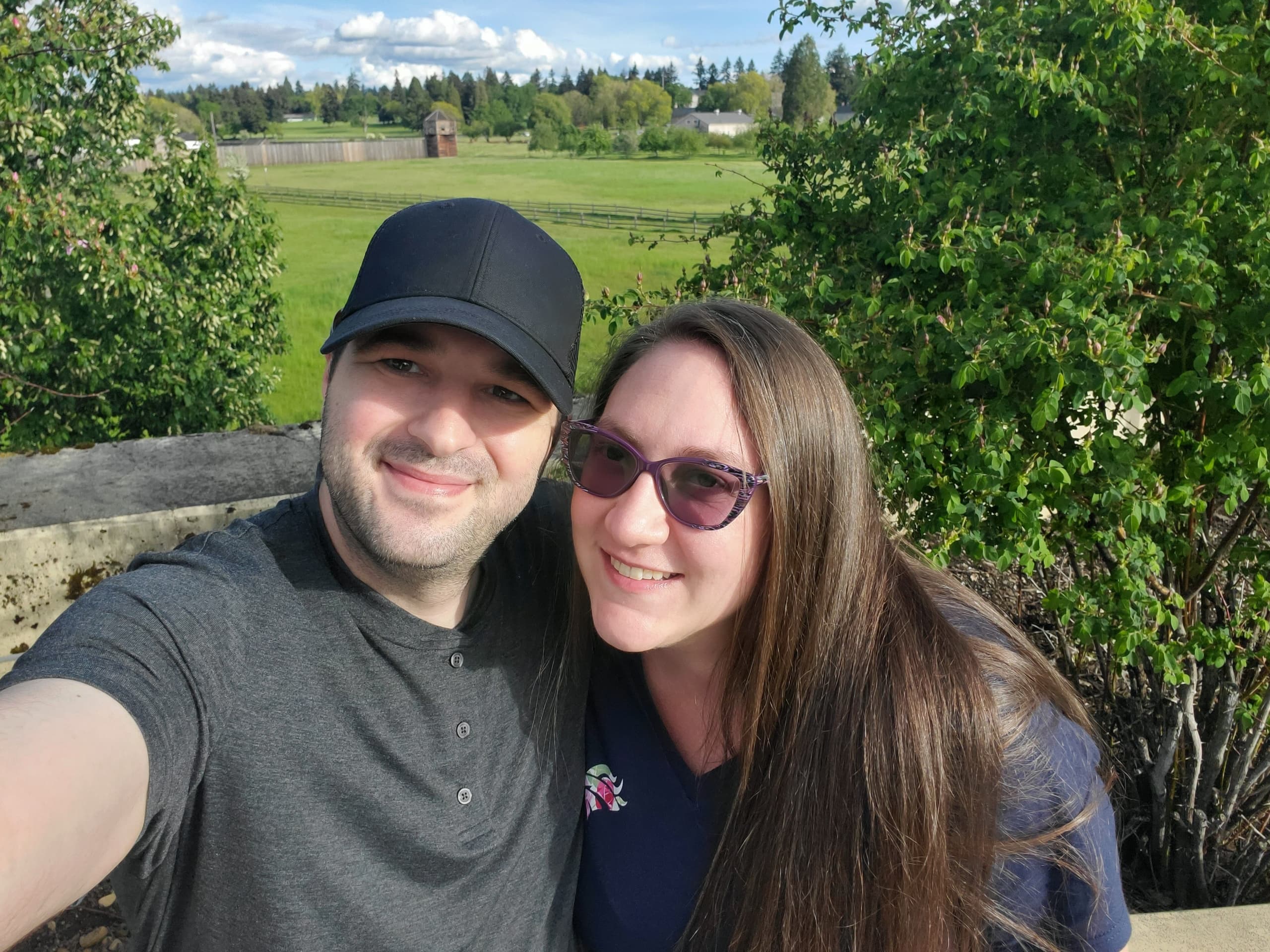
Writing this is incredibly difficult for us.
We're used to taking care of our family, working hard, and figuring things out ourselves. Asking other people—especially people we may never meet—to help us with something this personal feels incredibly vulnerable.
But after the last few years, we've reached a place we never imagined we would be.
We already have a family we love deeply. I have two children from before Treavor and I met, and together we've built a life and family that means everything to us.
We've also always dreamed of having a child together.
This would be our first child together and Treavor's first biological child. Treavor is an only child, and his branch of the Thorne family tree currently ends with him. For us, having a baby together has never simply been about passing down a last name. It's the opportunity to carry forward his family's heritage and history—to know that a piece of the generations who came before him will continue into another generation.
So we started trying.
After about six months, we finally saw a positive pregnancy test.
I'll never forget Treavor's reaction. This man does not cry—but there were tears in his eyes.
We told our parents. We started looking at baby things. I downloaded a pregnancy tracking app and started following along with this tiny new life we thought was beginning.
And then, almost immediately, everything changed.
I found out I was pregnant that morning. Late that same evening, we received completely unrelated devastating news: my cousin had suddenly passed away.
The following week, I flew to Utah for his funeral.
The morning after the funeral, I woke up in unbelievable pain and went to the hospital.
I was there alone. At the time, I didn't know what was happening, and my family had just come together to grieve. I wanted them to have that time together rather than worrying about me.
But at the hospital, things became much more serious.
The doctors couldn't find the pregnancy where it was supposed to be. At one point, I was nearly sent home.
Instead, they decided I needed exploratory surgery.
Suddenly, I had about 30 minutes to call my family and tell them I was going into surgery without really knowing what the doctors were going to find.
They found an ectopic pregnancy that had ruptured in my right fallopian tube.
We lost our baby, and I lost my right fallopian tube.
We later learned just how dangerous the situation had become. Had I been sent home instead of having surgery, the internal bleeding could have killed me.
When Treavor learned what had happened, he dropped everything and got on the next flight he could find to Utah so he could be by my side.
We had to stay there for three days before I was medically cleared to fly home, followed by weeks of physical recovery.
Emotionally, recovery was much harder.
We had only known about our baby for a matter of days. Somehow, in that tiny amount of time, we'd already imagined so much.
And suddenly it was gone.
We were devastated. We were shocked. And after coming so close to something much worse happening to me, we were scared.
But there was one thing we could hold onto:
I still had one fallopian tube.
We still had hope.
Before we could try again, I went through additional procedures and testing. Our doctors wanted to make sure we were giving a future pregnancy the best chance possible.
We did what we were supposed to do. We healed. We waited. And when we were finally cleared, we started trying again.
For two more years.
Month after month, we kept hoping that eventually we'd see those two lines again.
Then, this October, we finally did.
We were pregnant again.
After everything we'd been through, allowing ourselves to be excited was scary.
But we were.
We hoped this was finally our turn.
Because of our history, this pregnancy was monitored closely. For about a week and a half, I went for blood draws every 48 hours while we watched my pregnancy hormone levels.
Every result felt enormous.
We knew exactly what an ectopic pregnancy could mean this time.
We hoped. We worried. We waited.
And then the worst happened anyway.
Our second pregnancy was ectopic too.
This time, it was in my remaining left fallopian tube.
On October 17, I underwent another surgery.
We lost our second baby.
And I lost my remaining fallopian tube.
This loss came with another realization that was almost impossible to process while we were still grieving the pregnancy itself:
We couldn't simply try again.
After years of trying, two very wanted pregnancies, two ectopic pregnancies, and two surgeries, both of my fallopian tubes are now gone.
IVF is now our only medically viable path to having a biological child together.
And our insurance does not cover it.
Treavor is also a veteran, but unfortunately, the VA does not provide coverage for the IVF treatment we need either.
We wish we could simply save for it
We have good jobs. We have a home. We have health insurance. We've built a stable life together, and we have the ability to support another child.
What we weren't prepared for was suddenly needing tens of thousands of dollars in uncovered medical treatment just to have the opportunity to try.
IVF wasn't part of our plan.
Until a few weeks ago, we never imagined we'd be asking anyone to help us pay for it.
If time weren't a factor, we would simply save until we could afford treatment ourselves.
Unfortunately, time is something we don't have an unlimited amount of.
I'm 36 and will turn 37 in May. IVF success declines with age, particularly when using your own eggs. According to national data from the Society for Assisted Reproductive Technology, the live birth rate per intended egg retrieval is about %30 for patients age 35-37, compared with about %19 for patients age 38-40.
Those numbers are population averages—not a prediction of what will happen for us—and fertility doesn't suddenly change on a birthday. But they illustrate why spending several years saving for treatment isn't a realistic option for us.
And IVF itself takes time.
There are consultations, testing, medications, monitoring, egg retrieval, fertilization and embryo development before we even know whether we'll have an embryo to transfer.
One retrieval may not be enough.
One transfer may not work.
Many clinics require thousands of dollars in payment before treatment can even begin.
That means we don't simply have a large medical bill we can slowly pay off afterward. We need to come up with thousands of dollars just to get started.
We've already started taking the first steps. We've contacted a fertility clinic for our first IVF consultation. We're researching fertility grants, looking into medication assistance, determining what testing our insurance may cover, and figuring out how much we can contribute ourselves.
We're going to do everything we can.
But trying to do all of this alone could cost us something we can never earn back:
Time.
So we're asking for help
This is one of the most vulnerable things we've ever done.
We know there are no guarantees with IVF.
We could do everything right, spend all of this money, go through treatment—and still not bring home a baby.
We know that.
But after everything we've been through, we're not ready to walk away from the possibility of having a child together simply because the medical treatment that gives us that chance comes with a price tag we can't produce quickly enough.
Funds raised will go toward IVF and the care required to get us there: fertility consultations and testing not covered by insurance, medications, monitoring, egg retrieval, embryology, embryo transfer, and other necessary treatment expenses.
As we receive our treatment plan and actual costs from our clinic, we'll update this fundraiser so everyone helping us can see exactly what we're working toward.
And if we're incredibly fortunate enough to raise more than our fertility treatment ultimately costs, remaining funds will first be reserved for related medical and family-building expenses—and, if we are lucky enough to get there, all things Baby Thorne. ❤️
If you're able to donate, no matter the amount, we are incredibly grateful.
And if donating isn't possible, please share our story.
Our personal circle is relatively small, so sharing this fundraiser may genuinely be one of the most valuable things someone can do for us. Every share gives our story the chance to reach someone we never could have reached ourselves.
We've spent years trying to get here.
We've seen two positive pregnancy tests.
We've imagined two babies.
We've lost both pregnancies.
And each time, we lost a piece of the physical pathway that allowed us to keep trying naturally.
But we're still here.
We're still hopeful.
And we're not ready for this branch of our family tree to end.
We're not asking anyone to guarantee us a baby.
We're asking for help giving us the chance to try while that chance is still reasonably within reach.